‘A Constellation of Shadows’ is the debut, YA fantasy novel by Kay Rowan, and Book One in The Talliswood Series
PUBLISHING DATE TO BE ANNOUNCED SOON…
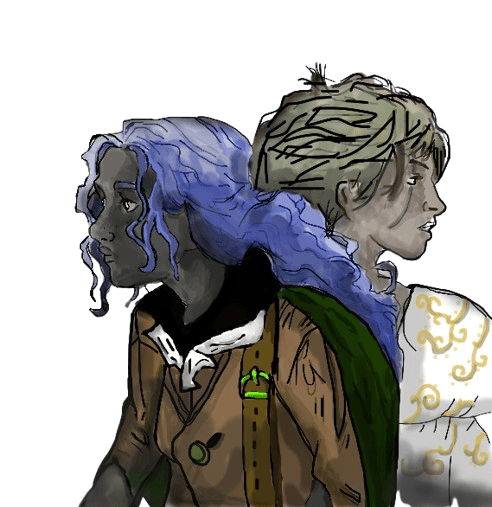
‘We live for peace’…her father had always made it sound so simple.
As the daughter of one of The Talliswood’s Ambassadors, it’s Aerva’s job to hold everything together. Eredhest’s war on her people may have ended, but there is always a cost to staying alive, and tensions are starting to grow again. Now, as part of a last-ditch peace deal, she has been shipped off to Udela Arkanium, one of Eredhest’s finest schools, right in the heart of enemy territory. All she has to do is get to the end of the school year alive, and without making too many enemies, and her people might stand a chance of surviving.
But when a mysterious assassin breaks into the temple on a mission to kill a teacher, Aerva’s life is suddenly turned on its head.
With the help of a troubled poet, a healer from the wrong side of the mountains, and a killer who cannot kill,
Aerva sets out to unravel a plot that could threaten the whole world…
…and maybe, just maybe, she’ll be able to save herself in the process.
I think the first book I ever remember writing was a guide on 'How to be a Pirate', although I don't really remember what the advice was. Probably just 'get a boat', 'get the right kind of hat' and make up the rest of it from there.

A lot has changed since then, but not the desire to tell stories. For the longest time though, I really struggled to find my voice. I used to fill notebooks with fantasy worlds and invented languages, most of which haven't survived the process of growing up. It was easier to live between the words on the page than in the real world. How much of that was due to me repressing the fact that I'm trans I couldn't tell you - probably a lot, in hindsight.

The world of Emasia has existed in my head for a really long time, but it didn't seem fair to bring those characters to life whilst I was struggling to bring myself to life. Now I'm here, I can finally do these characters justice. In 'A Constellation of Shadows', Aerva is facing a question so many have to ask themselves - how do you live after you've chosen to survive? With this book, I wanted to write the kind of story I'd needed growing up - a young, queer child, terrified of their own mind, uncertain about a future they weren't sure they'd be around to experience. She needed a story that reflected her own life in some way, that reminded her not to give up, to never stop fighting. She needed hope, basically. Unfortunately I can't go back in time to give her a copy, but I hope that the book can at least be that for someone else.

Want to learn more? Keep on reading…
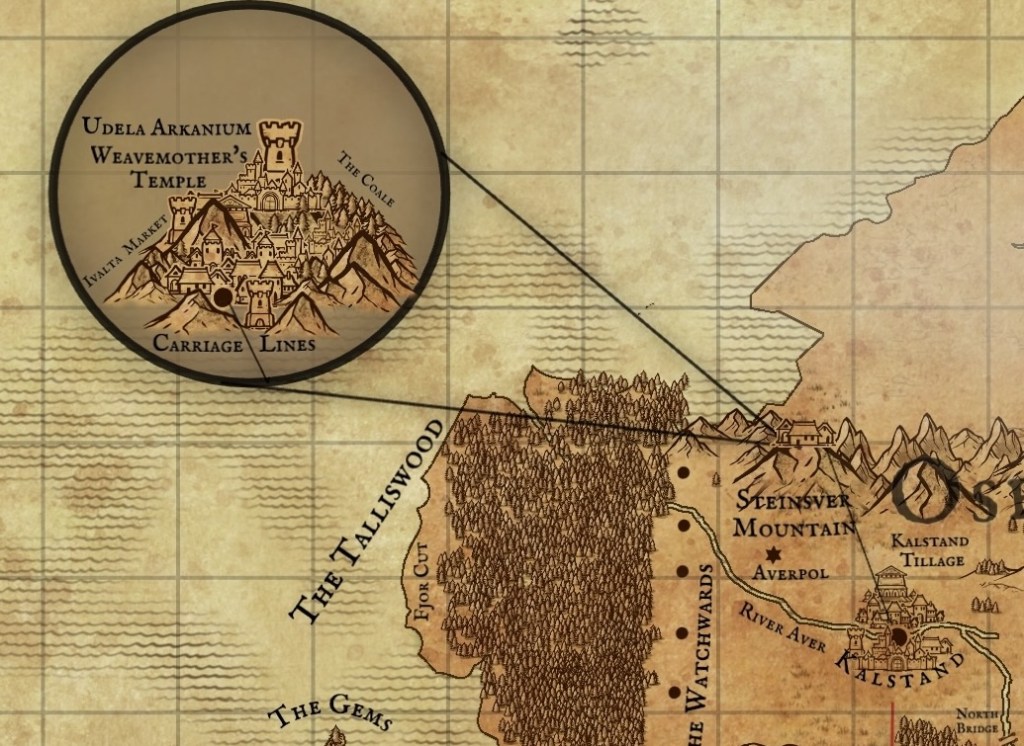
The first book, ‘A Constellation of Shadows‘, takes place in Eredhest. It’s located to the far north east of Emasia, and is surrounded on each side by the Lusenora Sea. To the north, beyond the Oselka Mountains, lies the frost-riddled country of Skevela.
Eredhest and Skevela have been locked in a vicious war for generations; the true reason for the war has been lost by now, but it’s generally understood that Skevela has a religious disagreement against Eredhest’s frequent (and violent) use of energi*.
After The Mad Queen was overthrown, control of Eredhest was handed over to a council of nobles, merchants and scholars known as The Illustria Conclave. Eredhest also has a dark history with it’s neighbour, The Talliswood (sometimes called The Wooden Stepps). The Talliswood used to be a lot larger, but after fighting a furious battle to survive against Eredhest, it’s now been reduced to seven, small settlements (or Nests) to the west of the island.
*for meaning of energi, scroll down to THE MAGIC SYSTEM
The Magic System
In this world, magic is referred to as energi. The generally accepted story is that, during the early days of the world, the Deities fought a huge war: some saw humanity as being worthy enough to save, but many Deities considered humanity a lost cause. Fearing that humanity would die in the crossfire, one God – Istali – took matters into his own hands. He stabbed the side of The Tree of Existence, stole the divine energi that bled out of it, and gave it to humanity to do with as they pleased. Whilst this did, in fact, save humanity, the act of theft was seen by some people as an unforgivable sin.
“Istali cast off his old title and became his true self. He plunged a sword into The Tree of Existence, mortally wounding it, and energi poured out from the wood. Then he readied his boat and sailed to Emasia, leading the waters of his new rivers behind him. That was when people began to find a new power stirring with them.” Another strike of his staff, echoing through the garden like the heartbeat of an enormous creature. “Some of the Deities feared this, and Istali was forced to hide for some time until their anger lessened. He became a salmon, a hare, a wren and a wolf, all so that he could remain undiscovered, but he was proved right in the end. We sided with the Deities, and with our newfound gifts, we saved the world from the horrors that threatened it…”
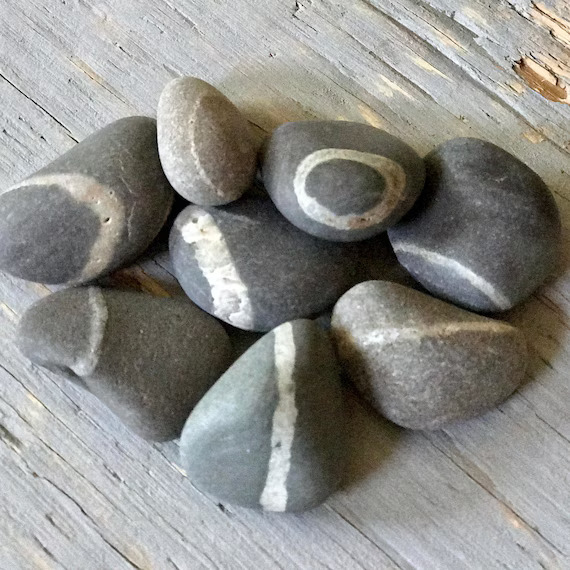
People with the power to use energi are called Olainen. They are born with a band of blue skin somewhere on their body (think of it like the wish stones you can find on the beach sometimes).
Different cultures treat Olainen in different ways. For example, in Skevela, they view Olainen as being tainted by this sin of theft, and many spend their lives in hiding. In The Talliswood, they let an individual’s gift (a dewyn) evolve naturally, without any influence or outside involvement, and it’s seen as something to celeberate. In Eredhest, they view energi as an area of academic study (usually only for the rich or well connected) – in fact, they came up with Arkana, a way of using energi for combat, which schools like Udela Arkanium specialize in teaching.
The Deities
The first book doesn’t deal with them much, except in passing, but they’re still good to know about. In this world, there are a lot of Deities (use this as the gender-neutral term for divine beings, unlike words like God/dess, which are gender specific). Even most students who study religion would admit that they don’t have names for all the Deities that exist. There are some that are more commonly recognised than others, though. In the first book, you’ll hear about The Lady of Death, (pretty self-explanatory), Istali, (God of Energi, Rivers, Springs and liersál*), Estrykur (Istali’s father, and God of the Sea), and The Weavemother (Mother of Nature, Fate, and the eldest Deity). You’ll also come across some followers of Avanwyn, (Goddess of poetry, travelers, luck and trade).
*see the section on gender
Gender
In this world, much like our own, there are people who operate outside of a hetro/cis-normative understanding. Some trans people pursue medical transition, (for example, by taking Sylphi), some don’t. Also like in our world, being hetero/cis-normative, or in any way transphobic, is a problem. Whilst there are people in Emasia who hold these kinds of prejudices, it’s considered cruel, unnecessary and malicious.
For example, in The Talliswood, the word for someone who is trans is liersál, (clay soul) – this is because they’re in control of their own destiny, and they have reshaped themselves to better fit who they truly are. Aerva, our main, POV character, is liersál. However, in Eredhest, trans people are insultingly called the reséda (the missing); they are seen as having lost themselves, forgetting who they were supposed to be; two different perspectives on the exact same process. One perspective is kind, and reflects the reality of the person’s lived experience – the other is just ignorant. And as Aerva points out in the book : “sometimes, I think people forget that one of our Deities is actually liersál.”
About the Author
Kay Rowan is an author and musician, based in England at the time of writing this biography. She is also trans which, as you can tell, has had absolutely no influence on this book whatsoever. A Constellation of Shadows is her first novel. When she isn’t coming up with useless bits of world building, (did you know that the traditional food of The Andalian Archipelago is spiced honey cake?), she can be found writing songs as ghostgirl, composing music for the stage and screen, and navigating an existential crisis (or four). Kay is terrible at talking about herself, so hides behind the use of third person narration as a way to cope with it.
 KAY ROWAN / GHOSTGIRL